Guides
8.6 Blackout Twist Rate Explained: 2026 Essential Guide
Jul
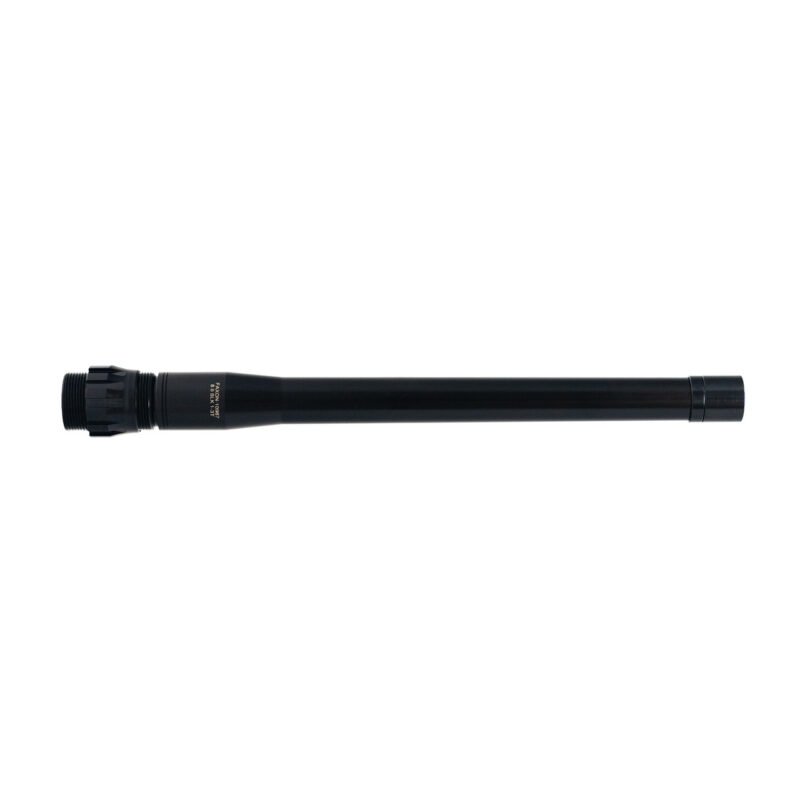
The 8.6 Blackout twist rate is the single design choice that sets this cartridge apart from every other .338 round on the shelf. A standard 8.6 BLK barrel uses a 1:3 twist, meaning the rifling turns the bullet one full rotation every three inches of travel. Most rifle barrels turn many times slower than that.
Twist sounds like a detail for barrel makers, but it decides which loads you can shoot well, which bullets will perform on game, and whether a rifle you are building or rebarreling will deliver what the cartridge promises. Here is what it does and how to use that knowledge when you shop.

In this guide
What does twist rate actually do?
Rifling spins a bullet so it flies point forward. Spin works like a gyroscope: it keeps the bullet stable against the air pushing on its nose. Longer bullets need more spin to stay stable, and slower bullets need more spin too, because there is less forward momentum helping them hold their line.
That is why barrel makers publish twist as a ratio. A 1:10 barrel turns the bullet once in ten inches. A 1:3 barrel turns it once in three, so at the same muzzle speed the bullet is spinning more than three times as fast. Cartridge and chamber standards are set by industry, and you can see the published drawings at SAAMI.
Why is the 8.6 Blackout twist rate so fast?
There are two reasons, and the second one is the clever part.
- Stability for long, heavy bullets. 8.6 BLK fires .338 bullets heavy enough to be long for their caliber. At subsonic speed, under roughly 1,100 fps, those bullets need a lot of spin to fly true.
- Terminal performance at low speed. A bullet spinning that fast carries a large amount of rotational energy. When it strikes, that spin helps tear a fracturing bullet apart or open an expanding bullet, even though the bullet is moving slowly. Subsonic bullets from ordinary twist barrels often pass through without opening.
In plain terms, the 8.6 Blackout twist rate is what turns a quiet subsonic round into a hunting round. Without it, you would have a quiet target load and not much else. That is also why so much of our subsonic ammo range is built around the 1:3 barrel.
Which loads need the fast twist, and which do not?
Not every load leans on the 8.6 Blackout twist rate in the same way. Supersonic loads get much of their stability and expansion from speed, while subsonic loads depend on spin.
| Load | Speed class | What it needs from the barrel |
|---|---|---|
| 285gr fracturing subsonic | Subsonic | 1:3 twist to fracture reliably at low speed |
| 342gr expanding subsonic | Subsonic | 1:3 twist for stability and expansion |
| 300gr Sierra MatchKing subsonic | Subsonic | Fast twist for stability; not a hunting bullet |
| 210gr Barnes TSX | Supersonic | Opens from speed; less dependent on twist |
If you own a factory 8.6 BLK barrel, the 285gr fracturing subsonic and the 300gr Sierra MatchKing subsonic will behave as designed. The 210gr Barnes TSX is the load to reach for when you want flatter flight and do not need to stay quiet.
What about slower twists and bolt only loads?
Some shooters build .338 rifles on barrels with slower twists, or rebarrel a short action bolt gun with whatever barrel is available. That can work for supersonic ammunition, but subsonic hunting bullets may not stabilize or open the way they are meant to. Check the twist stamped on the barrel or in its listing before you buy subsonic hunting loads for it.
Bolt only loads are a different matter. The bolt action only 300gr Berger Hybrid subsonic is labeled that way because of how it is loaded and fed, not because it suits a slower twist. Treat it as a fast twist load and read our post on shooting 8.6 Blackout in a bolt action for the reasons behind the label.
When in doubt, the simplest path is a barrel cut to the standard 8.6 Blackout twist rate. Every load in the cartridge family is designed around it, so you are not guessing.
FAQ
Can I use a slower twist barrel for 8.6 BLK?
You can chamber one, but you give up the reason most people buy the cartridge. Subsonic hunting bullets rely on the fast spin to perform. If you only plan to shoot supersonic loads, a slower twist is workable; otherwise stick with the 8.6 Blackout twist rate of 1:3.
Does a fast twist wear the barrel faster?
Subsonic loads run at modest pressure and speed, so barrel wear is mild in normal use. Heavy supersonic shooting adds more heat and wear, as it would in any rifle, so let the barrel cool between strings.
How do I check my barrel twist?
Look for the twist rate stamped on the barrel or in the maker’s listing. You can also measure it with a cleaning rod and a tight patch: mark the rod, push it until the rod turns once, and measure the distance traveled.
Shopping for a barrel built to the standard 8.6 Blackout twist rate? Browse 8.6 Blackout barrels, complete uppers and matching 8.6 Blackout rounds at Blackout Ammo Shop. New to the cartridge? Start with our 8.6 Blackout explained guide. Place your order, then contact us by Live Chat or text and we will send your payment request.
